

It’s been perhaps 10 years now since spirulina entered the kitchens of the French, and particularly those concerned about their health. It’s true, on paper, spirulina has many arguments in its favor.
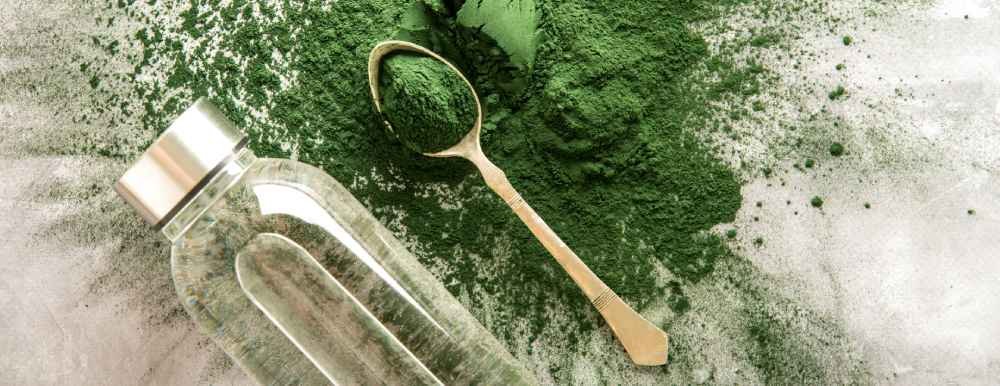
But I think it’s worth digging a little deeper into the subject and giving some additional explanations to understand the real implications, and in particular, its effects on bodybuilding/mass gain.
Spirulina: a superfood
For those who have been living under a rock all these years, spirulina is a blue-green freshwater microalga. It belongs to the cyanobacteria family and is often cultivated in sunny ponds, taking advantage of photosynthesis to grow.
So why all the hype around spirulina? The answer lies largely in its composition. Spirulina is a concentrated source of nutrients, which earns it the status of a “superfood”.
It contains an impressive cocktail of proteins, vitamins (especially B vitamins and vitamin E), minerals (zinc, iron, magnesium), antioxidants, and essential fatty acids. To put it in perspective, spirulina is significantly richer in protein per 100g than most traditional sources like meat or fish.
Attention!
This is where things get interesting… Relying solely on numbers can be misleading. As I mentioned earlier, we generally talk about the nutrient content per 100 grams. However, while it’s easy and common to eat 100g of chicken or salmon, you’re unlikely to consume spirulina. FYI:
- 1 teaspoon of spirulina powder = 4 g
- 2 tablets = 1 g
Spirulina and muscle gain
With these explanations, you understand that spirulina will ultimately have little impact on your mass gain results, given the small amount you will be consuming.
In bodybuilding, spirulina’s protein content is often highlighted: 57g per 100g of product. But if you calculate the actual protein intake from a normal daily consumption of spirulina (4g/day), it’s very little!
Let’s compare this with a “classic” consumption of animal protein during a meal: 200g of chicken ( 27g of protein per 100g ):
- 200g of chicken = 54g of protein
- 4g of spirulina = 2.3g of protein
So you understand that everything you hear on some blogs is just nonsense… spirulina is far from being the ultimate ally for gaining mass, as it is sometimes sold to us.
So, spirulina is useless?
Does this mean we should rule out spirulina altogether? NO. It remains a food with a very interesting profile, and therefore a good addition to a rich and varied diet.
Be careful about the origin of your spirulina… As is often the case, it’s important to select a quality product (and quality comes at a price). Some spirulina, particularly those produced in China, could be more harmful than beneficial. So, carefully check the origin, manufacturing standards, and choose a reliable brand.

