

Your vision may be blurrier and weaker than it was a few years ago. You may have farsightedness (hyperopia) and presbyopia (age-related farsightedness), which affect vision to varying degrees. We’ll examine how these two eye conditions affect your vision and what you can do to correct or lessen their effects.
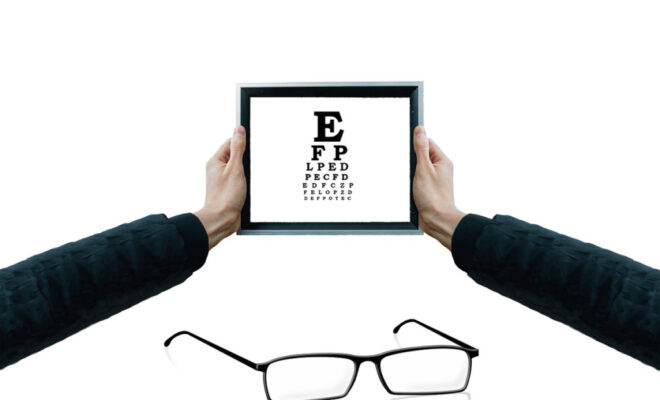
What are hyperopia and presbyopia?
Farsightedness (hyperopia) is a common eye condition that occurs when the eye’s lens and/or the shape of the cornea are too thin to focus on sharp objects. This can cause blurred vision, eye strain, and headaches. Presbyopia, on the other hand, is a loss of the eye’s ability to focus on near objects and is often associated with aging. Both affect vision and can be corrected with glasses or contact lenses.
How do hyperopia and presbyopia affect vision?
Both hyperopia and presbyopia affect vision, though in different ways. Hyperopia is characterized by blurred vision and difficulty seeing distant objects. Presbyopia, on the other hand, is characterized by blurred vision and difficulty seeing near objects. Furthermore, both hyperopia and presbyopia also affect color vision and the perception of detail.
What are the optical correction options?
Fortunately, there are many vision correction options available for people with farsightedness and presbyopia. Glasses offer a quick and easy solution to these vision problems. Lenses can correct distance or near vision and can be single-vision or progressive lenses. Contact lenses are also an option, as is refractive surgery.
How are children affected?
Children can also be affected by farsightedness (hyperopia) and presbyopia. Children with farsightedness may have trouble seeing distant objects and colors clearly, while children with presbyopia may have trouble seeing close objects. Children can also have other vision problems, such as nearsightedness (myopia) and astigmatism, which can also be corrected with glasses or contact lenses.
What are the long-term effects?
People who do not receive treatment for their vision problems may experience long-term effects. Vision can worsen if vision problems are not corrected, potentially leading to a loss of visual acuity and a decrease in the quality of the retinal image. Furthermore, failing to treat farsightedness (hyperopia) and presbyopia (age-related farsightedness) can result in long-term eye health problems, such as eye damage or retinal degeneration.
How can vision be corrected?
There are many ways to correct or improve vision in cases of farsightedness (hyperopia) and presbyopia (age-related farsightedness). Glasses and contact lenses are common options for correcting near and distance vision problems. Refractive surgery is another option, although the risks and benefits should be discussed with an ophthalmologist. Laser surgery can also be considered for correcting distance and color vision problems. It is important to consult a doctor to determine the best treatment for your specific case.
Conclusion
Farsightedness (hyperopia) and presbyopia are common eye conditions that affect vision to varying degrees. Both can cause blurred vision, eye strain, and headaches. Fortunately, there are many optical correction options to correct or lessen the effects of farsightedness and presbyopia, including eyeglasses, contact lenses, and refractive surgery.
Q&A comments
Following the questions you asked us in the comments section of this article, we have answered your questions in detail. Here are our answers:
What are hyperopia and presbyopia?
Hyperopia (farsightedness) is an eye condition in which the eye is too short to allow light to focus properly on the retina. Presbyopia is a type of vision that gradually declines with age because the lens becomes stiffer and cannot focus correctly.
What are the common symptoms of both conditions?
The most common symptoms of both conditions include difficulty seeing close objects, headaches, and eye strain. People with farsightedness may also have trouble seeing distant objects.
How do these conditions affect our vision?
Both conditions can impair vision, especially for near objects. People with farsightedness or presbyopia may have difficulty reading or seeing close objects clearly. People with farsightedness may also have trouble seeing distant objects clearly.
What are the solutions to correct these conditions?
Glasses and contact lenses are commonly used to correct farsightedness and presbyopia. In some cases, excimer laser surgery may be recommended to correct these conditions.
Are these visual problems reversible?
Most cases of hyperopia and presbyopia are reversible with glasses or contact lenses. Excimer laser surgery is a non-reversible option that may be recommended if the patient does not want to wear glasses or contact lenses. However, it is important to note that this procedure is not without risk and must be performed by a qualified professional.

