

In short: protein ice cream is a creamy frozen dessert built on a high-protein base, usually protein powder plus yogurt or cottage cheese and thickened with frozen fruit, so each serving carries 20 to 30 grams of protein and a fraction of the added sugar of regular ice cream. It takes about five minutes to blend and two to four hours to firm up, and no ice cream maker is required.
Regular ice cream is mostly cream, sugar and air. That combination tastes wonderful and does very little to keep you full, which is why a bowl can leave you back in the kitchen twenty minutes later. Protein ice cream keeps the cold, spoonable pleasure and swaps most of the sugar for protein, the most filling of the three macronutrients. The result is a dessert that answers a sweet craving without the sharp blood sugar swing that tends to follow it, which is the same reason it helps to stop eating sweets at night by fixing the daytime rather than white-knuckling the evening.
What is protein ice cream?
Protein ice cream is exactly what the name suggests: ice cream where a meaningful part of the volume is protein rather than fat and sugar. Online it turns up in two forms. The first is the blender version, where frozen banana or other frozen fruit is blended with protein powder and a little liquid into a soft-serve texture, then optionally frozen firmer. The second is the machine version, made in a counter-top frozen-dessert maker such as a Ninja Creami, which blends a pre-frozen base into a smooth scoop.
Both routes deliver the same thing: a dessert you eat with a spoon that carries real protein. Neither one asks you to be a skilled cook, and both cost less per serving than a premium tub from the freezer aisle.
The basic ratio to remember
You do not need an exact recipe as much as a ratio. Think of it as frozen fruit for the body, a thick base for the cream, one scoop of protein for the point, and just enough liquid to keep the blender moving.
Frozen fruit, about a cup and a half, gives the cold, thick texture. A ripe banana is the classic choice because it blends silky, but frozen berries, mango or a mixed bag all work. A thick base, about half a cup of plain Greek yogurt, skyr, cottage cheese or a thick plant yogurt, adds creaminess and more protein. Add one scoop of protein powder, roughly 20 to 25 grams, as whey, casein, a blend or a plant protein. Then add liquid, a splash to a quarter cup of milk or a plant drink, a tablespoon at a time, until the mixture moves.
That is the whole framework. From there you are adjusting for texture, not starting over.
Step by step: five minutes to soft serve
The blender method is the fastest route to a bowl. Add the frozen fruit, the thick base and the protein powder to a blender with just a splash of liquid at the bottom. Blend on low to break everything up, then increase to high, scraping down the sides once or twice. Resist adding all the liquid at the start, because the mixture needs to stay thick enough to hold a scoop.
If it will not move, add liquid one tablespoon at a time. If it turns out too thin, add a few more pieces of frozen fruit or another spoon of yogurt. Stop when it looks like soft serve. Eat it straight away for a mousse-like texture, or spoon it into a container and freeze it for two to four hours for firmer scoops.
If you use a Creami-style machine rather than a blender, mix the base ingredients, freeze the tub flat for at least twelve to twenty-four hours, then run the machine’s lite-ice-cream setting and re-spin once if it comes out crumbly. The machine method rewards patience in freezing; the blender method rewards restraint with liquid.
Which protein powder to use
The protein you choose changes the texture more than any other ingredient. Whey protein blends smoothly and gives the lightest, most ice-cream-like result, especially whey isolate. Casein and casein-heavy blends set thicker and firmer, which suits the machine method. A combined whey-and-casein blend is the easiest middle ground for a first attempt. Plant proteins such as pea, soy or a blend work too, but pea alone can taste chalky; a blend tends to be smoother, and a little extra yogurt helps carry the flavour.
If you already start the day with a protein-forward drink, the protein coffee recipe is essentially the same idea in a glass. One practical warning on powder: many flavoured versions are already sweetened, so taste the mixture before you add sweetener of your own. If your powder is unsweetened, a little honey, maple syrup or a sugar-free sweetener is fine, but go lightly, because frozen fruit carries more sweetness than people expect.
How to keep it creamy, not icy
The most common problem is a base that freezes into a solid block. Three fixes solve almost all of it. First, keep enough fat or thick dairy in the mix: fat and protein interfere with the formation of large ice crystals, and those crystals are exactly what makes a frozen dessert feel icy rather than creamy. Second, do not overdo the liquid, because water freezes hard. Third, if you are freezing the blend for later, stir it once an hour for the first three or four hours, or re-blend it briefly before serving, to break up the crystals as they form.
If a tub has gone rock solid, leave it on the counter for five to ten minutes, or give it a short re-spin, before you scoop. Ten minutes of patience beats a bowl of shards.
Three variations to start with
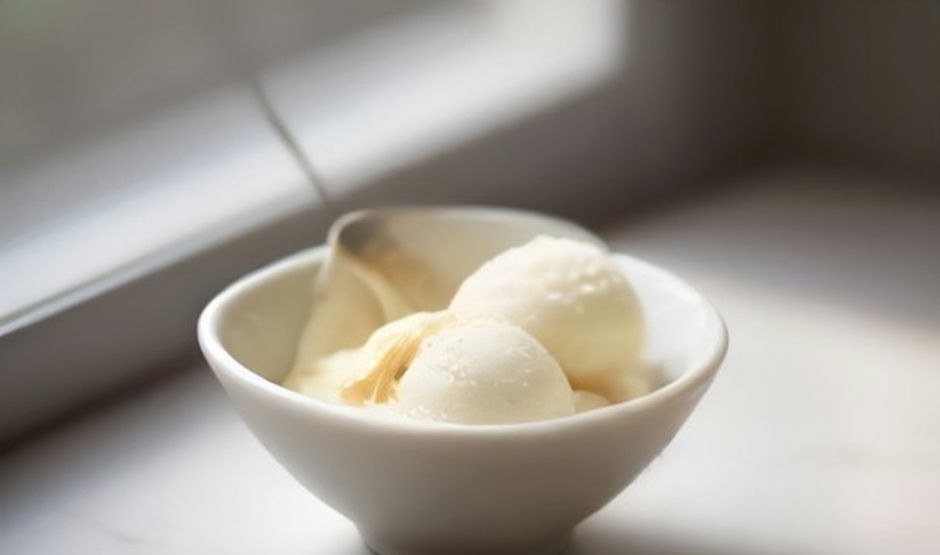
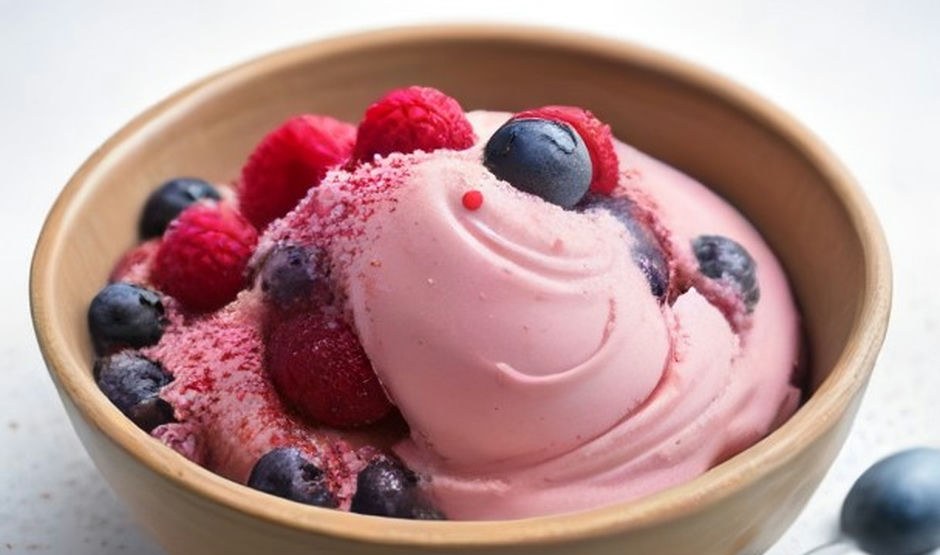
Once the ratio is in your head, flavour is the easy part. Vanilla is frozen banana, vanilla whey, Greek yogurt and a splash of milk with a little vanilla extract, and it is the most forgiving base and the closest to classic soft serve. Chocolate uses chocolate protein powder with a tablespoon of unsweetened cocoa, blended with frozen banana or a handful of frozen cherries; cocoa is bitter, so this version usually benefits from the fruit rather than extra sweetener. Berry is frozen mixed berries with vanilla or unflavoured protein and thick yogurt, and it is the lowest-sugar of the three because berries carry fibre alongside their natural sweetness.
How much protein you actually get
A typical serving made with one scoop of protein, half a cup of Greek yogurt and about a cup and a half of frozen fruit lands between 25 and 35 grams of protein for roughly 250 to 350 calories. The exact figures depend on your powder, your yogurt and your portions, so the honest approach is to read the labels and add up your three or four ingredients once. After that you will know your own bowl by sight.
For context on how a serve like that fits a day, our guide to how much protein you actually need explains why spreading protein across meals tends to beat saving it all for dinner.
Why it fits a steadier way of eating
Because the base is protein and fruit rather than sugar and cream, protein ice cream raises blood sugar far less sharply than a conventional scoop. That matters if your goal is steady energy rather than a spike and a slump. It is also a useful evening swap: a high-protein, low-sugar dessert is much less likely to restart the craving loop than a sugary one, so it can close the day without the mental tug of a forbidden food.
If dessert tends to slide into grazing, the same principle behind stopping mindless snacking applies here. A satisfying portion, eaten on purpose rather than straight from the tub, is the thing that ends the session.
Before you start
This is a food idea, not medical advice. If you have diabetes, kidney disease, or any condition that affects how much protein you eat, check the numbers with your doctor or a dietitian before making it a daily habit. Protein powders can carry allergens such as milk and soy, and some include added sweeteners, so read the label. Keep portions sensible as well: protein is filling, but it is not calorie-free, and a very large bowl is still a large dessert.
Sources
- Harvard T.H. Chan School of Public Health. Protein.
- Leidy HJ, Clifton PM, Astrup A, et al. The role of protein in weight loss and maintenance. Am J Clin Nutr. 2015;101(6):1320S-1329S. PubMed 25926512.
- US Department of Agriculture. FoodData Central (food composition data used for protein and sugar figures).
- NHS. The Eatwell Guide.

