

In short: most people do not need to count macros to lose weight. A calorie deficit is what moves the scale, and for most of us the fastest fix is not a spreadsheet but more protein and more fibre, eaten earlier in the day. Counting macros earns its keep in only a few situations: a stubborn plateau, serious strength training, or a medical reason to protect muscle while you lose fat.
Search for “macros for weight loss” and you will find a hundred calculators and a hundred ratios, each promising that the right split of protein, carbohydrate and fat is the thing standing between you and the body you want. The honest answer is less exciting and more useful. The split matters, but it matters far less than the total amount you eat, and the two things that make that total easy to hit are protein and a little patience. In my case, losing the weight never involved counting a single macro. What changed was what I ate and when, and the discipline took about a week to take hold.
Why “macros for weight loss” is really a protein question
Macronutrients are the three energy-providing nutrients in food: protein, carbohydrate and fat. Every diet ever sold, from keto to low-fat, is really just a different arrangement of those three. That is why the macro question feels important. But when researchers compare diets with the same calories and different macro splits, weight loss comes out roughly the same. What changes is how hungry people feel, and how much muscle they keep.
Protein is the macro that does the heavy lifting for weight loss, and the reason is simple. Of the three, it is the most filling per calorie, it takes the most energy to digest, and it protects lean muscle. When you lose weight, some of what leaves your body is muscle, not fat. Keeping protein high tips that balance in your favour, so more of the loss is fat and your metabolism does not sag.
What the evidence actually shows
This is not marketing. In a controlled feeding study published in the American Journal of Clinical Nutrition, people eating a higher-protein diet reported less hunger and spontaneously ate several hundred fewer calories a day without being told to restrict anything. A later review in the same journal found that higher protein intakes help preserve lean mass during weight loss and improve appetite control, which is exactly the mechanism most people are chasing when they buy a macro app.
Fibre works in the same direction. It slows the emptying of the stomach, steadies the blood sugar response to a meal, and feeds the gut bacteria that influence appetite signalling. If your meals leave you hunting the cupboard an hour later, the problem is usually too little protein and too little fibre far more often than the wrong carb-to-fat ratio.

When counting macros genuinely helps
There are real cases where tracking earns its effort. If you have lost weight steadily and then stalled for several weeks while doing everything the same way, your estimates of portion size have usually drifted, and a couple of weeks of honest logging will show you where. If you lift seriously and want to gain muscle while staying lean, the protein target matters enough to be worth measuring. And if a doctor or dietitian has given you a specific target for a condition such as type 2 diabetes or high blood pressure, follow their numbers rather than any generic online split.
Outside those cases, tracking has a quiet cost. It turns meals into arithmetic, it makes eating out stressful, and it is one of the most common triggers for the obsessive, all-or-nothing pattern that ends in a binge. A tool that helps for three weeks and then gets abandoned has not helped.
A simpler way to get the ratios right
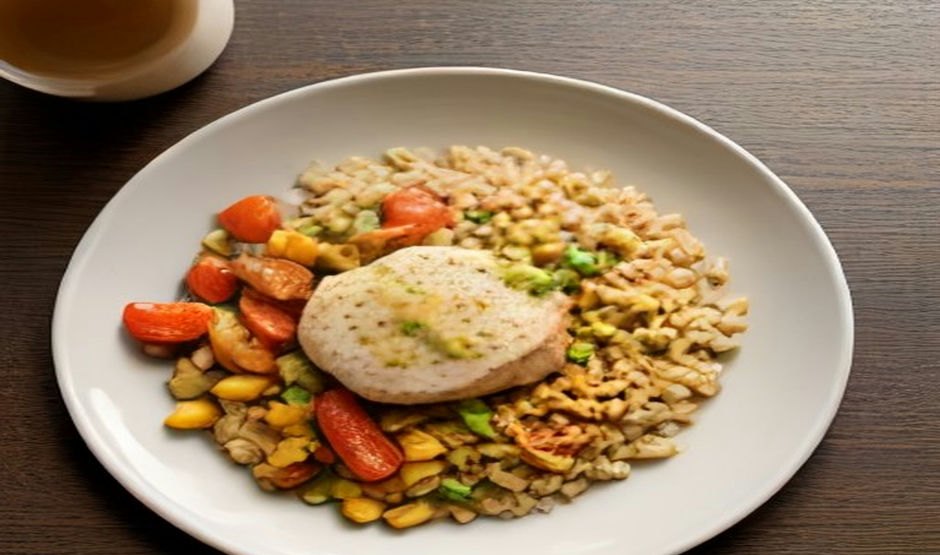
Instead of counting, build the plate. Put a palm-sized portion of protein on it first, fill half of what remains with vegetables, and let whatever carbohydrate you enjoy take the smaller corner. This single habit delivers a protein-forward, fibre-rich, calorie-controlled meal without an app, and it works in a restaurant where no label exists. Eating the protein and vegetables before the carbohydrate also blunts the sugar spike from the starchy part of the meal, which flattens the afternoon slump and the evening craving that follows it.
If you want to see what this looks like in numbers for your own body, the protein and macro calculator will give you a calorie target and a protein, carb and fat split, and shows the working behind every figure. Use it as a starting estimate, not a rulebook. For most people the protein number is the only one worth remembering: somewhere between 1.6 and 2.2 grams per kilogram of body weight, or roughly 0.7 to 1 gram per pound, is where the satiety and muscle-sparing benefits plateau. If you are also cutting back on packaged food, cutting down on ultra-processed foods without going hungry covers how to do that without living on carrot sticks, and how much protein you actually need explains why gym membership is not part of the equation.
The mistakes that stall weight loss
The most common mistake is not the split but the calories hiding in plain sight: oils, dressings, drinks and the “just a taste” while cooking. The second is protein that looks high on paper but is mostly bread and beans. The third is sleep and movement. If you are awake and stressed at midnight, no macro ratio will keep you out of the kitchen, and the evening walk you skipped is worth more to your appetite than the app you favourited. Aim for a short walk after your largest meal and a consistent bedtime, and your hunger hormones will do more of the work than any tracker.
When to talk to a doctor
See your doctor or a registered dietitian before a major change if you have diabetes, kidney disease, a history of an eating disorder, or you take medication that affects blood sugar or blood pressure. Rapidly dropping weight for no clear reason, fainting, or persistent digestive problems all warrant a medical review rather than another diet. This article is general information, not personal medical advice.
Sources
Weigle DS et al., “A high-protein diet induces sustained reductions in appetite, ad libitum caloric intake, and body weight despite compensatory changes in diurnal plasma leptin and ghrelin concentrations,” American Journal of Clinical Nutrition, 2005. pubmed.ncbi.nlm.nih.gov/16002798
Leidy HJ et al., “The role of protein in weight loss and maintenance,” American Journal of Clinical Nutrition, 2015. pubmed.ncbi.nlm.nih.gov/25926512
World Health Organization, “Healthy diet” fact sheet. who.int/news-room/fact-sheets/detail/healthy-diet
NHS, “Healthy weight” (live well). nhs.uk/live-well/healthy-weight
National Institute of Diabetes and Digestive and Kidney Diseases, “Body Weight Planner.” niddk.nih.gov/bwp
Be disciplined, strong, motivated, relentless – do not let what goes into your mouth control who you are or how long you’d live!
Chimaobi Kanu, author of PostandShare
If I am honest about my own case, the numbers were never the point. I eat on a fixed pattern, protein first and nothing late, and I have done that long enough that I forget to eat when I am deep in work. That is not a macro split; it is a routine so simple it survives a bad day. If counting helps you for a few weeks, count. But if counting makes you quit, put the app down, put the protein on the plate first, and let the habit do the arithmetic for you.
You may also like: why you crave sugar at night and how to actually stop it.

