

In short: if you are still hungry after eating, the meal was almost certainly missing protein, fiber or volume, not calories. Rebuilding it as a balanced plate, roughly half vegetables, a quarter protein and a quarter slow-release carbohydrates with a little fat, usually settles the hunger within a few days.
Finishing a full plate and still feeling empty is one of the most common complaints in nutrition, and it is rarely about willpower or even portion size. Your body decides whether a meal was enough using two separate systems: mechanical signals from your stomach wall, which register how physically full you are, and hormonal signals from your gut, which take roughly twenty minutes to reach your brain and tell it to stop. When a meal is built in a way that trips only one of those systems, or trips them weakly, you can eat plenty of food and still feel like you have not eaten at all.
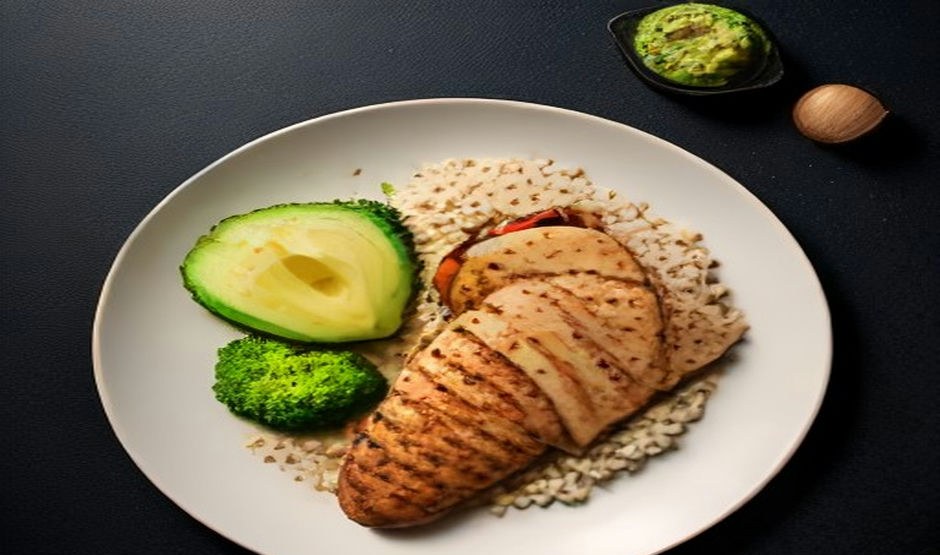
Why you can eat a full meal and still feel hungry
Hunger after eating is a signal, not a character flaw. Fullness is built from a conversation between your gut, your fat cells and your brain. As food fills your stomach, stretch receptors in the stomach wall fire through the vagus nerve, and specialised cells in your small intestine release satiety hormones such as GLP-1, PYY and CCK as nutrients arrive. A large salad with moderate calories can feel more satisfying than a small, calorie-dense snack simply because of that stomach stretch.
On top of the mechanical signal sits the hormonal one. Protein and fiber are the two nutrients that most reliably trigger the fullness hormones and slow the rate at which food leaves your stomach, which is why a meal built mostly around refined carbohydrates tends to empty quickly and leave the “I am hungry again” signal arriving far too soon. When those two systems are underused, post-meal hunger is not a mystery. It is a predictable result of how the plate was built.
The five reasons post-meal hunger happens
1. Not enough protein
Protein is the most satiating macronutrient, and it is the single most common gap in meals that leave people hungry. A lunch of pasta with tomato sauce, a breakfast of toast and jam, or a dinner that is mostly rice and vegetables produces weak, short-lived fullness signals. Research on protein and appetite, including a controlled trial published in the American Journal of Clinical Nutrition, shows that raising protein intake reduces hunger and the drive to eat later in the day. The fix is structural rather than about eating more: a palm-sized portion of protein at each main meal, treated as the anchor the rest of the meal is built around. If you are unsure how much that is, our guide to how much protein you actually need breaks it down by body weight.
2. Not enough fiber and volume
Fiber slows gastric emptying, meaning food stays in your stomach longer and keeps releasing fullness signals on a steadier stream. It also absorbs water and expands, adding to the physical stretch that tells your brain the meal was substantial. Most adults in the US and UK fall well short of the recommended intake, and a plate low in vegetables, beans and whole grains empties quickly. Filling half the plate with fiber-rich vegetables and fruit before anything else is the most reliable way to close the gap without counting grams, and our explainer on how much fiber you actually need shows what that looks like in practice.
3. Eating too fast
Satiety hormones need fifteen to twenty minutes to peak after you start eating. If you finish a meal in eight minutes, you have eaten everything before the “stop eating” message has arrived, so you feel full from the stretch signal and then feel hungry again as it fades. Eating while distracted by a phone, a screen or work makes it worse, because part of how your brain registers a meal as complete is the attention you pay to it. The fix is not to eat slowly for its own sake but to build in pauses: putting your fork down between bites, taking a sip of water, or simply adding one two-minute pause in the middle of the meal is usually enough.
4. A blood sugar spike and crash
If your hunger hits hard one to four hours after eating, and comes with shakiness, irritability or difficulty concentrating, a blood sugar crash may be responsible. Meals heavy in refined carbohydrates can send blood sugar up sharply, prompting an oversized insulin response that pulls it back down below comfortable levels, a pattern sometimes called reactive hypoglycemia. Your body reads the drop as a need for fuel even though you just ate. Pairing carbohydrates with protein, fat or fiber slows the absorption and flattens the curve, which is the same principle behind the swaps in our post on why you crave sugar at night.
5. Sleep, stress and thirst
Poor sleep rewires appetite hormones in the wrong direction. In a study published in the Annals of Internal Medicine, sleeping only four hours a night for two nights raised ghrelin, the hunger hormone, and lowered leptin, the fullness hormone, enough to noticeably increase appetite the next day. Stress raises cortisol, which stimulates appetite directly, and mild dehydration is easily mistaken for hunger because the thirst and hunger centres in the brain sit close together. Before assuming a meal failed, check how you slept and how much water you have had.
What is a balanced plate?
A balanced plate is a simple visual method for building meals that keep you full and steady, without weighing food or counting anything. It is the practical version of the guidance used by public health bodies such as the NHS Eatwell Guide and the Harvard Healthy Eating Plate. The proportions are what matter, not perfection at every single meal.
Picture your plate in four parts. Half of it is non-starchy vegetables and fruit, which supply the fiber and volume that trigger fullness and slow digestion. A quarter is protein, such as chicken, fish, eggs, lean meat, beans, lentils, tofu or Greek yogurt, which is the most satiating nutrient and protects muscle. The remaining quarter is slow-release carbohydrates, such as whole grains, potatoes with the skin, oats, or beans, which provide steady energy rather than a spike and crash. Add a modest amount of fat, such as olive oil, avocado, nuts or seeds, to slow digestion and carry flavour.

The point is not to eat less. It is to change the composition so that the same number of calories produces a much stronger and longer-lasting fullness signal. A 400-calorie muffin and a 400-calorie meal of eggs, vegetables and whole-grain toast will leave you feeling completely different two hours later.
How to build a balanced plate that actually keeps you full
Start with protein. Put the palm-sized portion on the plate first and build the rest around it. This single change removes the most common cause of post-meal hunger, and it matters most at breakfast, where protein intake is usually lowest. If you eat in the morning, a protein-forward first meal changes appetite for the rest of the day, which is the mechanism behind our post on why skipping breakfast backfires.
Then add vegetables to half the plate, before you add anything else, so they are not squeezed out by the more calorie-dense foods. Next add the slow carbohydrate quarter and a small amount of fat. Use your hand as the measuring tool: one palm of protein, one cupped hand of carbohydrate, one fist of vegetables, one thumb of fat. Finally, slow the meal down with one deliberate pause, and drink water with it rather than waiting until afterwards.

What a balanced plate looks like across a day
At breakfast, that might be eggs with sauteed spinach and a slice of whole-grain toast, or Greek yogurt with berries, nuts and oats. At lunch, a palm of grilled chicken or a bowl of lentils, half a plate of salad and roasted vegetables, and a cupped hand of quinoa or brown rice. At dinner, fish or lean meat with a large serving of vegetables, a modest portion of potato or whole grains, and a drizzle of olive oil. Snacks, if you need them, work better as small balanced plates too: an apple with peanut butter, or cottage cheese with cucumber, rather than something that is mostly sugar or refined starch.
Most people who rebuild their meals this way notice a difference within a week, and the change tends to be self-reinforcing, because meals that keep you full make the next craving easier to ride out.
When hunger after eating needs a doctor
Occasional hunger after a light meal is normal and nothing to worry about. Persistent, intense hunger that does not improve after several weeks of better-balanced meals, or that comes with unexplained weight loss, excessive thirst, frequent urination, blurred vision, fatigue or dizziness, is worth discussing with a doctor. Constant insatiable hunger can be a sign of conditions such as type 2 diabetes, an overactive thyroid, or a hormonal problem, and it is worth ruling those out rather than assuming the answer is always on the plate. This article is general information, not medical advice, and anyone managing a health condition or taking medication should speak to their own clinician before changing how they eat.
Sources
Harvard T.H. Chan School of Public Health, The Healthy Eating Plate. NHS, The Eatwell Guide. Weigle DS, et al. A high-protein diet induces sustained reductions in appetite, ad libitum caloric intake, and body weight, American Journal of Clinical Nutrition, 2005. Spiegel K, Leproult R, Van Cauter E. Brief communication: Sleep curtailment in healthy young men is associated with decreased leptin levels, elevated ghrelin levels, and increased hunger and appetite, Annals of Internal Medicine, 2004. Mayo Clinic, Weight loss: Feel full on fewer calories. Centers for Disease Control and Prevention, Healthy Eating for a Healthy Weight.

