

Are you looking for those “little details” that could optimize your training? That’s the topic I’m going to discuss today: the anatomy of your biceps. Generally speaking, we differentiate between short and long biceps.
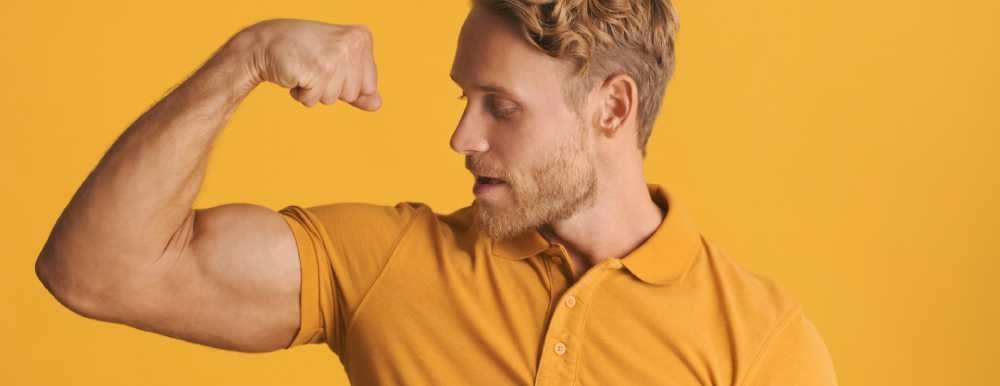
Understanding the size of your biceps can help you choose the most effective exercises to maximize your gains. So, how do you determine if you have short or long biceps? And, more importantly, which exercises should you prioritize in each case?
How can you tell if you have short or long biceps?
Nothing could be simpler:
- Bend your arms to 90° to contract your biceps.
- Measure the distance between the bottom of your biceps and your forearm using your fingers: if the gap is two fingers or more, you have a short biceps. If you can’t fit two fingers in that space, then your biceps is long.
It’s a hereditary factor; you can’t change the shape of your muscle through exercise. But in itself, neither short nor long biceps are preferable. Each type has its own advantages and disadvantages… Some people may have short biceps but wish they were longer, or vice versa!
Advantages and disadvantages of having long biceps
The shape of your biceps is a genetic factor; it is impossible to change the morphology of this muscle by doing exercises.
But in itself, neither short nor long biceps are preferable. Each type has its own advantages and disadvantages… Some people may have short biceps when they would like them to be longer, or vice versa!
To summarize, here are the advantages/disadvantages of a long biceps (for those with a short biceps, it’s the opposite!) :
Benefits
- Aesthetic appearance: when well-developed, the long head of the biceps can be visually more appealing because it occupies more space on the arm. This gives the impression of a more muscular and harmonious arm.
- Range of motion: Long biceps muscles allow for a greater range of motion. This is an advantage for all curl exercises.
Disadvantages
- More difficult development: due to its length, it can be more difficult to fully develop. It generally requires a higher training volume to achieve significant results.
- Less pronounced peak: if you like having a “bulge,” it will be less visible when the arm is contracted. This can give the impression of a less developed arm, even if that’s not the case.
long biceps
For those with long biceps, the goal is to maximize the development of both heads of the biceps, that is, the long head and the short head. To do this, the focus must be on certain specific exercises.
- The pulley back stretch curl : allows you to work the biceps under constant tension, which can help develop a denser and stronger muscle.
- The preacher curl with a barbell : although this exercise is beneficial for all types of biceps, it is particularly effective for long biceps due to the isolation it provides.
- Supinated pull-ups : for me the best exercise for the biceps… Its complete movement promotes the development of the biceps while working other muscle groups in the upper body.
Short biceps
If you have short biceps, here are some specific exercises that can help you optimize your workouts:
- Hammer curl : by engaging the brachialis anterior and the long supinator, this exercise is particularly useful for working your short biceps.
- Preacher curl : promotes maximum biceps contraction, and is therefore very beneficial for those with short biceps.
- Reverse curl : highlights the upper biceps and allows for more even development.

